Payment Processing for International Merchants Selling into the U.S.: Compliance, Risk, and Approval Reality

Selling to U.S. customers does not require a U.S. company—but payment processing approval often does. This is where many international merchants fail. Processors don’t reject foreign merchants because they are international. They reject them because enforcement, recovery, and compliance risk increase across borders. This article explains how processors evaluate international merchants selling into the U.S.,… Continue reading Payment Processing for International Merchants Selling into the U.S.: Compliance, Risk, and Approval Reality

Chargeback Monitoring Programs Explained: How Visa and Mastercard Decide When Merchants Get Burned
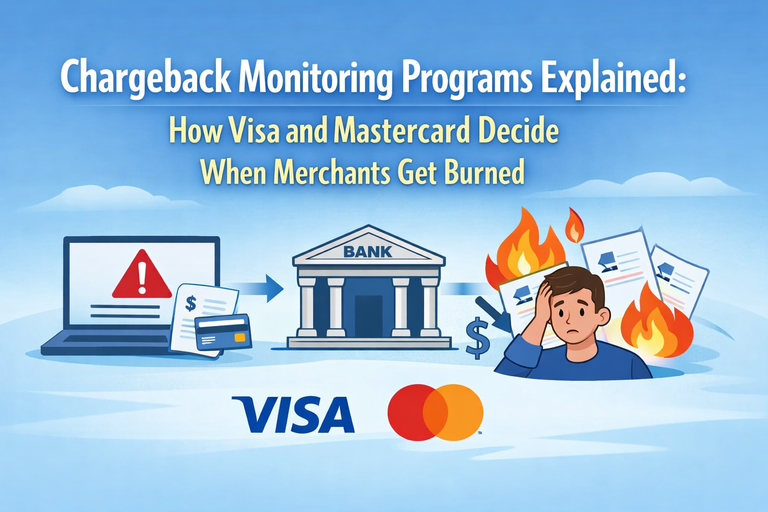
Most merchants believe chargebacks are a processor problem. They’re not. Chargebacks are a card network enforcement mechanism, and once Visa or Mastercard intervenes, processors lose flexibility. Merchants don’t get shut down because processors “overreact.” They get shut down because network rules leave no room to negotiate. This article explains how chargeback monitoring programs work, when… Continue reading Chargeback Monitoring Programs Explained: How Visa and Mastercard Decide When Merchants Get Burned
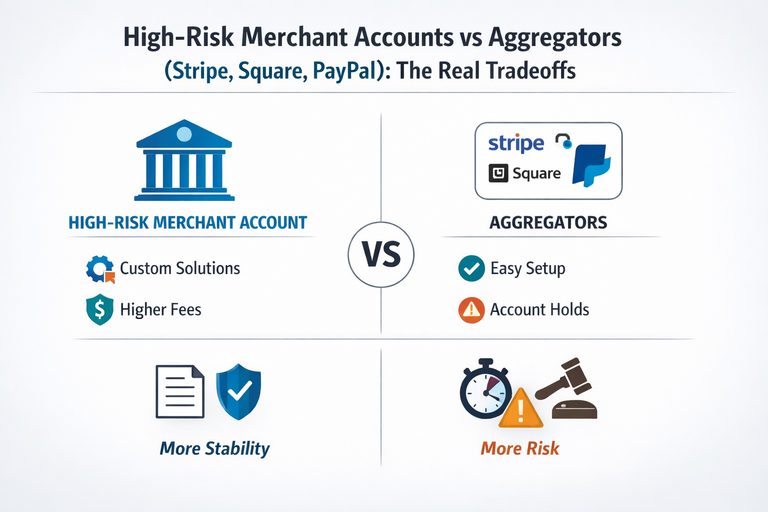
High-Risk Merchant Accounts vs Aggregators (Stripe, Square, PayPal): The Real Tradeoffs

Most merchants don’t choose between a high-risk merchant account and an aggregator. They default to an aggregator—and only learn about the alternative after something breaks. Stripe, Square, and PayPal dominate because they promise speed, simplicity, and instant approval. High-risk merchant accounts exist because those promises collapse under real risk. This article explains the actual tradeoffs… Continue reading High-Risk Merchant Accounts vs Aggregators (Stripe, Square, PayPal): The Real Tradeoffs

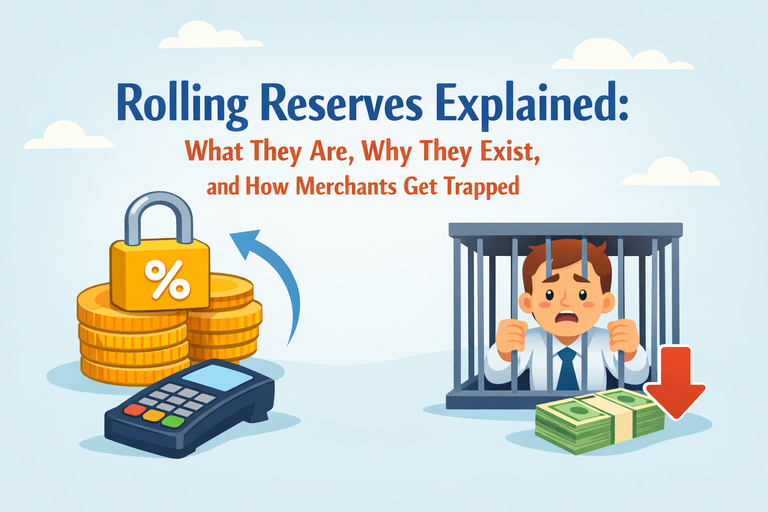
Rolling Reserves Explained: What They Are, Why They Exist, and How Merchants Get Trapped

Rolling reserves are one of the most misunderstood—and emotionally charged—elements of payment processing. Merchants often discover them only after approval, when funds are already being withheld. That’s not accidental. It’s a symptom of how risk is priced in payment processing. This article explains what rolling reserves actually are, why processors use them, how they impact… Continue reading Rolling Reserves Explained: What They Are, Why They Exist, and How Merchants Get Trapped

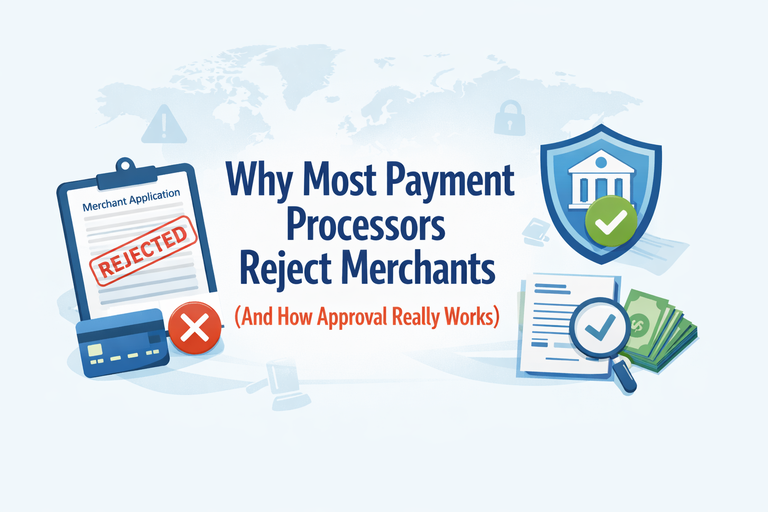
Why Most Payment Processors Reject Merchants (And How Approval Really Works)

Most merchants assume payment processor rejections are arbitrary. They’re not. Approval decisions follow a strict risk framework designed to protect banks, card networks, and processors—not merchants. If you’ve ever been denied a merchant account, shut down unexpectedly, or asked for reserves without explanation, this article explains what’s really happening behind the scenes and what actually… Continue reading Why Most Payment Processors Reject Merchants (And How Approval Really Works)

Trust Signals Every Payment Provider Must Prove (And Red Flags That Predict Disaster)

If you’re searching “Luis Requejo Miami,” you’re probably trying to avoid a predictable nightmare: you choose a payment “partner,” things look fine for 30 days, then the first problem hits and you discover nobody is accountable. Payments providers don’t just “process transactions.” They touch: your revenue your customer experience your compliance exposure your ability to… Continue reading Trust Signals Every Payment Provider Must Prove (And Red Flags That Predict Disaster)

Cross-Border & Multi-Currency Payments That Don’t Destroy Approval Rates (A Practical Playbook)

Cross-border looks simple on a slide: “Sell internationally.” In real life, it’s where merchants get punished by invisible problems: higher declines, higher fraud pressure, higher chargebacks, messy FX costs, and slower settlement. If you’re searching “Luis Requejo Miami,” here’s the standard: cross-border expansion only counts if you can keep: authorization rates healthy fraud controlled FX… Continue reading Cross-Border & Multi-Currency Payments That Don’t Destroy Approval Rates (A Practical Playbook)

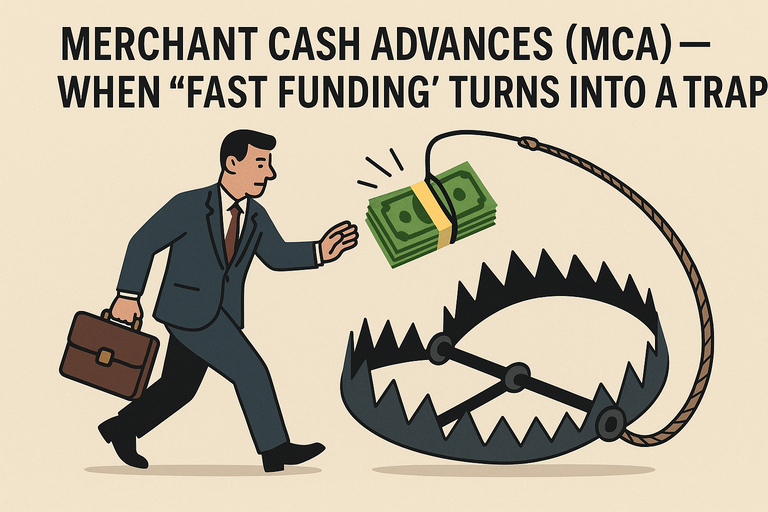
Merchant Cash Advances (MCA) — When “Fast Funding” Turns Into a Trap

Merchant cash advances get sold like a shortcut: “Get money fast. Repay from future sales.” Sometimes that’s helpful. Often it becomes a slow-motion business collapse. If you searched “Luis Requejo Miami,” you’re probably trying to make a hard decision under pressure—inventory, payroll, expansion, a bad month, or a surprise expense. Here’s the standard: if the… Continue reading Merchant Cash Advances (MCA) — When “Fast Funding” Turns Into a Trap

Scale Online Payments Without Fraud and Chargebacks Killing Your Merchant Account

Scaling online payments is not “more orders.” It’s more exposure. As your volume grows, three things rise with it: fraud attempts friendly fraud (customers disputing legitimate charges) scrutiny from banks and card networks If you don’t build control early, you’ll learn the worst lesson in payments: success can trigger shutdowns. This article is a real… Continue reading Scale Online Payments Without Fraud and Chargebacks Killing Your Merchant Account

In-Person Payments & POS That Actually Improve Operations (Not Just “Take Cards”)

If you searched “Luis Requejo Miami,” you’re probably dealing with one of these realities: Your checkout line gets slow at peak hours and you lose sales. Refunds/voids are out of control and you suspect abuse. End-of-day reconciliation is messy and nobody trusts the numbers. Inventory is “close enough” until it isn’t—and then you’re out of… Continue reading In-Person Payments & POS That Actually Improve Operations (Not Just “Take Cards”)